
Cation Exchange Capacity (CEC) can be a useful indicator of soil texture because of its strong correlation with the soil's clay and organic matter content. These components largely determine the soil’s ability to hold and exchange nutrient cations.
The Relationship Between CEC and Soil Texture
CEC measures the total amount of negative charges on soil particles that attract and hold positively charged ions (cations), such as potassium (K⁺), calcium (Ca²⁺), and magnesium (Mg²⁺). The vast majority of negative charges in soil are found on clay particles or organic matter. Thus, soil texture—defined by the proportion of sand, silt, and clay—affects CEC significantly. There is a direct effect, because soil texture indicates the amount of clay present, and an indirect effect, because fine-textured soils tend to store more organic matter. This is why soil texture is important: it strongly affects the soil’s ability to retain nutrients.
Higher Clay Content = Higher CEC
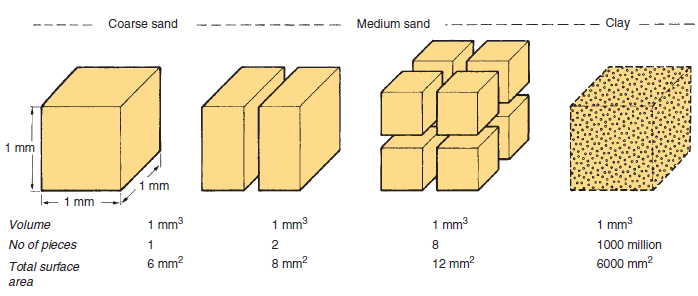
Clay particles are much smaller and have a larger surface area compared to sand or silt for the same volume or weight of soil. This greater surface area allows clay-rich soils to carry more negative charges, which leads to a higher CEC. Soils dominated by sand, which has relatively low surface area and little charge, typically have much lower CEC values.
The Role of Organic Matter
Organic matter (e.g., decomposed plant and animal residues) also contributes significantly to CEC. It contains negatively charged functional groups like carboxyl and phenolic groups that hold onto cations. Therefore, even a sandy soil with high organic matter can have a moderate to high CEC.
Estimating Soil Texture from CEC
Because CEC is so closely linked to clay and organic matter content, it can serve as a rough indicator of soil texture:
- Low CEC (i.e., <10 meq/100g) → Likely sandy, coarse-textured soil with little organic matter.
- Moderate CEC (i.e., 10–20 meq/100g) → Likely loam or silty loam with moderate clay and/or organic matter.
- High CEC (i.e., >20 meq/100g) → Likely clay-rich or organic-rich soil.
Conclusion
CEC provides a relatively quick and cost-effective way to infer soil texture, especially when laboratory methods (like particle-size analysis) are not available. While it's not a substitute for detailed soil testing, it offers a valuable insight into the physical and chemical characteristics of soil that are most important for fertility.
Comments
0 comments
Please sign in to leave a comment.